Saturday, March 17, 2012

St. Procrastination's Day

Happy St. Patrick's Day everybody!  Of all the holidays out there, this is definitely one of them.  So instead of boring you with a Wikipedia-rewrite of today's history, I'm going to talk about something more interesting.  And that topic is: procrastination!

I know you're expecting me to say, "So let's talk about procrastination...some other day."  And then ending the article.  I, too, had that initial thought.  However, I did not want to rob you of this fascinating, hopefully-educational post.  (Also, I've already been working on it staring at it for a few weeks now, so, self-fulfilling prophecy or something.)

Caption, to be determined

If you're wondering what procrastination means, but don't feel like looking it up...well, there you go.

Procrastination is putting off something until later.  "Why do today what you can put off until tomorrow?" is how the (twisted) saying goes.  The word is generally meant to have a negative connotation: it's being lazy, not taking initiative/action, dilly-dallying, avoiding responsibility, etc, etc.  However, for you cockeyed optimists, consider it a biological mechanism that allows us to truly prioritize our lives, and see what's really important to us - like video games and Pawn Stars reruns, as opposed to homework and job applications.

Of course, those aren't really what's most important, but we still choose to do these menial things over other, more truly important tasks.  There's a thousand reasons / excuses why we procrastinate.  Perhaps it's an internal fear of failure for that important task, or truly not knowing what to do / where to start, thus forcing yourself at a later date to make a decision because you have no time left.  No time to weigh this option versus that one, just choose.  Putting yourself in desperation / survival mode.  Or perhaps it's true laziness.

Sometimes it turns out alright, sometimes it doesn't.  And I'm not condoning procrastination, but I'm not going to castigate you for it either.  It's something we all do.  Just, some more so than others.  However, everyone who does procrastinate always realizes  - after the fact - that perhaps it wasn't the best decision that could've been made.  But hindsight is 20/20.  You want to learn from your mistakes.  You want to do better.  But you can't quite overcome that mental barrier, despite all your past failures and disappointments.

So are you doomed to procrastinate forever?

No!  Fear not, friends!  Over the years I have found a way to combat procrastination, and it doesn't require you to be any less lazy!  I know, at first it sounds akin to the diets/pills that allow you to (healthily) lose weight with no exercise, no nutritional guidelines, eating what you want / when you want, and no surgery.  But it's not, I promise.  I see it as something more similar to "the bigger they are, the harder they fall," or using your opponent's size against him.  Un/willingly forcing yourself to be more responsible.  Yes, ladies and gentleman, I'm talking about battling your procrastination...with more procrastination.

[Whoa, did you just feel that?  That was me rocking your world.]

Yes, the best way I've found to force myself to do something is to come up with another task I want to do even less.  Procrastinate something so much, that you actually have to do something to keep up the procrastination.  At first glance that may just sound like a quip, or a "surface-level" solution that actually holds no water upon further scrutiny.  However, it is a tried-and-true method for me.  For example, back in college, if I had to do laundry, I wouldn't be motivated to do so by the overflowing dirty clothes basket - simply pick that which smells less pungent.  Rather, I'd remind myself that I have a paper due in 3 days, and I should really be working on that.  I need to do research, type up an outline...nah...I really need to do laundry, I'll work on that paper later.  Boom!  Two hours later, laundry is done.

Now I know you're thinking, "OK, I guess that works for small tasks.  But eventually you'll run out of larger / more imposing tasks to put off as time goes on."  Well, that's the beauty of this system: it actually works "circularly" and not linearly.  You don't need a more daunting task to make you do a (relatively) smaller task - you can get the larger task done by procrastinating the smaller task(s).  It may take multiple smaller tasks combined to be imposing enough to force you to do the larger task, but it will work: "Gah, I really need to do laundry, but I really don't want to.  And I should finish that book and return it to the library.  And vacuum my room.  Oh yeah, I have that paper due in a few days that I could be working on..."  Bam!  Two days later, you finish your paper!  Admittedly, it was awkward going to the library to print it while wearing a Christmas sweater, swim trunks and your girlfriend's pink toe socks.  But the paper got done, and that's what's important here.

So there you are.  A method to help battle procrastination using the ammunition you already have.  So please, use this system to your advantage.  If there's something you really should be doing, but can't un-procrastinate quick enough, just start procrastinating a thousand other things, and somehow that first task will get done.  Lather, rinse, repeat.

Congratulations!  You've made it to the end of the article - you are not a (complete) procrastinator!  To bring this post full-circle, seeing as how it is St. Patrick's Day, I'd be remiss if I didn't ask you, "Who all seen da leprechaun, say yeeeaahhh."

Friday, March 16, 2012

Two Songs about Home

It recently dawned on me how similar these two songs are (though they have different lyrical moods). The first, Radical Face's Welcome Home, deals with a return back to a place of comfort after being away for a while and having a less-than-perfect experience. The second, Edward Sharpe & the Magnetic Zeros' Home, is a little more homey in nature, reveling in the good aspects of being home and how, sometimes, "home" is where someone you care about is, rather than any fixed place. 

Both songs are somewhat uplifting, and I can't listen to Home without smiling (you may recognize it from the NFL commercial--I've noticed a trend of using Edward Sharpe music in commercials). Without further ado, enjoy each in succession. Hopefully you can think of Home while doing so.

"Welcome Home" - Radical Face (2007)

"Home" - Edward Sharpe & the Magnetic Zeros (2009)

Thursday, March 15, 2012

The Commercial World

While watching TV commercials this morning, I started to daydream about what life would be like if we lived in the world that's portrayed in said commercials.  I imagine a typical day would go something like this:

I wake up in a panic as I realize that everything is black and white.  Have I lost my ability to see colors and hues and tones?  No.  I simply am using an inferior product.  But what could it be?  I must remedy this issue  so I can regain full use of my senses.  The problem quickly reveals itself when the attractive model who happened to be sleeping next to me wakes up.  And by "wake up" I mean that she dramatically (and silently) arches her back and grimaces while sitting on the edge of...THE BED!  I mean, I feel quite refreshed, but if the beautiful stranger thinks I need a new mattress on which to spoon, with no sheets and no blankets, and with a glass of wine in the corner (or maybe some bowling pins), then I will do everything in my power to buy the right one.  After being magically transported to the mattress store, we select a mattress on which I can jump up and down without waking my girlfriend/wife/one-night-stand or (perhaps more importantly) spilling my alcoholic beverage.
"After nine commercials, I've forgotten what film we were watching"

With the world returned to it's normal color, I can finally start my day.  After enjoying a bowl of Brand Name Bran (part of a complete, colon-healthy breakfast), I turn on the TV.  As one might expect, every channel's lineup consists of half-hour commercials, with short breaks for...more commercials.  I think I see a news program, but it's just a fake report by a fake anchor about a fake break-in at the home of a senior citizen.  Although maybe that break-in is real in this commercial world.  This is all starting to become confusing, and now I have a headache, so I take two Aleve for all-day relief (it would take eight Tylenol to do that).

My headache cured, I decide to drive around and explore this strange new world.  I find a brand new Cadillac in my driveway (that talking baby did wonders for my investment portfolio) and, oddly enough, an old Subaru Forester (I must have some sort of nostalgic memories associated with it).  I'm really hoping to be able to fly down curvy highways (on a closed course) at 190mph without worrying about a speeding ticket or even an accident (because I just bought insurance from a diminutive cartoon army general, and no longer have to worry about Mayhem).  But alas, it seems everyone else in the area has the same idea, because the highways are backed up with everything from Audis to Jaguars to Volvos (all driven by professional drivers).

I take the next exit and head for the scenic natural wonder of the Grand Canyon.  This will surely make the day worthwhile!  Nope.  There is yet another traffic jam waiting to frustrate my day further, but upon closer inspection I find that normal automobiles are not the culprit, but rather a swarm of senior citizens on motorized scooters, slowly puttering their way to the top where they can revel in how active they are in their old age.

Well this is all just too much for me.  By now, I'm just ready for this day to be over.  I return home, take a bath in an old-fashioned tub that is inexplicably stationed outside of my house, watch TV in my Snuggie, and gradually fall asleep while counting Serta sheep jumping over furniture from the Red House.


P.S.- I came across this during my internet searches, and it made me laugh.  It might make you laugh too.

Review: Monster X-presso Hammer

After finding relative enjoyment in my last Monster beverage [read the review of Monster Java Loca Moca here], I decided to pick up a new coffee-themed Monster drink this morning. Actually, I didn't bring my coffee tumbler but I still wanted a caffeinated drink this morning, so I had to spend something like $3 instead of the 15 cents or whatever a single pot of coffee costs to make. Blame the high cost of living.
Monster X-presso Hammer

So what do I think of X-presso? Well I appreciate the slender can design, as it reminds me of my favorite energy drink, Red Bull. However, the taste is, well, like espresso (with foam--be aware that Monster X-presso has a very foamy texture) but with a little something extra. That something was also present in the Loca Moca I tried a few weeks ago, and I'm assuming that's the Monster, there to justify marketing this as a Monster product and not just another Starbucks Doubleshot. Whatever the case, it's decidedly out of place in an otherwise very coffee-y drink.

On the plus side, I was able to get used to the Monster taste after a few swigs, and by the time I was nearing the end of the can I could hardly tell it wasn't a Doubleshot. Whether that's good or not is up for debate, because if there isn't a distinction between the two, I'm betting most people will just grab the Starbucks.

Like other Monster beverages (and energy drinks on the whole), X-presso has a laundry list of vitamins and supplements on the back, many of which sound like rare tropical diseases. I'm also continually disappointed in how Monster refuses to print the caffeine content on their cans. If soda companies can do it on their standard products, I think a company peddling high-caffeine drinks should.

However, the distinction I just made may be the reason in itself--maybe Monster doesn't want us to be aware of how fast our hearts will be racing by the time we finish the can. Fittingly, Monster does print the following on the can: "CONSUME RESPONSIBLY - MAX 1 CAN EVERY 4 HOURS WITH LIMIT 3 CANS PER DAY." Is this a morning drink or a bottle of Tylenol? The can's warning continues: "NOT RECOMMENDED FOR CHILDREN, PREGNANT WOMEN, OR PEOPLE SENSITIVE TO CAFFEINE." Well, if my heart isn't racing from the caffeine content itself, it sure gets going reading the CYA disclaimer on the back of the can. Admittedly, Monster may be responding to the litigious nature of our society, but the fact that such a response is thought to be necessary causes at least a little concern.

On the whole, I find Monster X-presso Hammer to be a decent espresso drink, though the odd hint of Monster flavor and the overly creamy texture leaves something to be desired. I would try it again, but I don't think it's worth the $3/can.

Verdict: 5/10

Tuesday, March 13, 2012

The Time Travel Fallacy, part 1

This is the first in a multi-part mini-series on time travel. I plan to release three segments--one per week--over the next several Tuesdays. However, that's not a concrete situation, and I may add more if more aspects of interest arise.

Time travel, as I see it, has a few problems. I'm not going to wade into any physics issues, or the concern about the ability to surpass the speed of light, but rather simply discuss a few issues that I perceive in a metaphysical manner. There are two specific issues, possibly mutually exclusive, with time travel in general. Because of the length of discussion that can go with each, I've chosen to break this post up into three parts. The first will concern how any changes that are made via time travel would have already occurred in the present from which the time traveler came. The second part will discuss the argument that, if time travel were possible, how come we've never exposed anyone in history to be a time traveler? The final segment is slightly different, briefly examining the implications of time travel for the person doing the traveling. Without further ado, let's dive into the first issue.

Issue 1: Changes made in the past would already be perceived in the future as "normal," and hence no changes could subsequently be made.

Roads? Where we're going we don't need roads.
There are dozens of movies, books, and TV shows that use time travel as a main plot tool (and, as it turns out, many more TV shows that use time travel as a device in at least one episode). The most common situation has the protagonists going back in time to interact with characters that are presumably baffled by the appearance and existence of the time travelers. However, under the theory of time travel to which I subscribe, none of these stories would go quite as they're depicted for one key reason: time travel that changes a past reality in any way will be reflected in the future from which the time traveler came, and thus whatever changes he or she may make in the past would have already happened in the reality as it exists in their contemporary time. 

This doesn't mean that one can't necessarily change something through time travel. I think it's silly to say that, if time travel is possible, one cannot actually perform any action in the past that would have a future effect. But you can't have the present exist in one form, go back in time, and return to a completely different present--at least, not in the "universe" that the previous present exists in.

What does this mean? Stay with me, because I fear I'm losing you, if not myself. Let's look at an example in order to try and hash it out. If I'm disappointed that I'm not financially well-off in the present (2012), but I inexplicably also have access to a time travel device, I may decide to go back in time and set myself up with some great investment. I could go back to 1980 and buy into the Apple IPO, reaping huge rewards when I return to 2012. Sounds good, right? Well I don't think it's quite that simple.

First of all, from a purely economic perspective, if this could be done, people would flood back in time to invest in things that turn out to be big, and as we see, not many people actually have the foresight to start early on with a big winning investment (i.e. we would probably see many more people win big in great investments). Similarly, people would pull this trick with Powerball by learning the numbers and going back in time to buy the winning ticket. Not only would this ruin the value of such lottery games, it would have been noticed by now (to be discussed in segment two).

Now, to examine the example from a time travel perspective. Let's say I have a time machine and use it to go back in time and buy into Apple. I also have a friend who agrees to run the machine and wait in my basement, manning the controls while I'm gone (although if performed correctly, I should return to the present at the same time I left, or even before, which could open up a whole different can of worms). How does that friend perceive this supposed shift in the "truth?" It's easy for one to picture the change from the traveler's perspective, because the time travel event functions as the change point, where on one side I don't have the money and on the other I do.

But for people who are in the present, how do they see it? Do I return from my trip (imperceptibly, as I said) and he suddenly knows I have several million in my bank account? Where does the trigger event happen where he goes from "knowing" I'm broke in 2012 to "knowing" I'm rich in 2012? Nothing will have changed for anyone who didn't make the trip, right? Perception of events as they exist (or passed before) are pretty black and white. My friend, who knew about the time travel mission beforehand, will not be able to perceive the difference between "before I left" and "after I got back." No time will have passed in his perception, and there will be no triggering event for him.

It is partially for the above reason, a paradox of sorts, that I have trouble conceiving of time travel. To people who did not make the trip (if indeed such a trip is possible), there is never a trigger moment at which reality changes. Assuming, arguendo, I succeed with my Apple IPO mission, from my friend's perspective (as well as everyone else's), I have always had the fortune I gained in 1980--just as Oceania has always been at war with Eastasia.

I suppose this isn't to say that changing events isn't possible. All it says is that events that are changed will have always been changed, and hence no change will be made. This subtle distinction may in fact be self-defeating, because if any time travel changes will have always been "reality," how will I know to go back and change them? In a circular way, if I go back in time to change something, it will never have existed in any other way upon my return, but if it never existed, how can I need to change something, hence what purpose would time travel serve?

To avoid tying my brain in any knots, I'll end here. But after parsing all of this out, it appears to me that time travel--at least for the purpose of changing past events--is not plausible. If changes made through travel are imperceptible in the "new" present, and have always been as they become after the trip, how can one time travel to make those changes in the first place? I also avoided getting into the "multiple universes" theory of time travel and teleportation, because that will make heads explode.

The post is best read with this song playing in the background.


Monday, March 12, 2012

I'm No Artist #2: Being Tall

I'm No Artist #2: Being Tall


Unfamiliar with the series?  Check out the introduction: I'm No Artist


Tuesday, March 6, 2012

The Full Metal Jacket Effect

R. Lee Ermey as Gunnery Sergeant Hartman in Full Metal Jacket
I recently re-watched Stanley Kubrick's Marines and Vietnam War masterpiece, Full Metal Jacket. As I watched the first section of the movie (I like to think of it as two separate movies rolled into one--training and the war), I was quickly reminded of how I felt when I watched it the first time: it in no way made me want to join the Marines. It in fact had a negative effect, leading me to determine that if that film were my only window into a portrayal of life as a Marine-in-training, I would think anyone who agrees to do so must be crazy. I have subsequently dubbed this effect the "Full Metal Jacket Effect," which I will define as the net decrease in desirability of picturing yourself in the same setting as the characters in a [military] movie. I confine it to to military movies only because I have to stop it somewhere, right? Otherwise this would be a post encompassing every movie ever made--so let's stay on topic.

Conversely, the Full Metal Jacket Effect can be seen in its inverse, consisting of movies that lead to a net increase in desirability of being in a similar military situation as the film portrays. One would think these would be harder to find, because a good, knowledgeable director will do his or her best to make war seem as "hellish" as possible. War never changes, right? Even so, these do exist, maybe because of the movie's ability to glorify the courage or nobility of actions taken by its actors.

Whatever the reason for the FMJ Effect and its inverse, I wanted to highlight a few movies that fall on each side of this continuum, with brief commentary of each. I will warn you that they may contain spoilers (though for ones that cover true, historical events you should have already come across spoilers in high school history class). I will rate the following movies on FMJ Effect scale from -10 (highly negative) to 10 (highly positive). Keep in mind this is a select sampling, not meant to include all relevant films that exist or even all that I've seen.

"Full Metal Jacket Effect" Most Negative (-10)

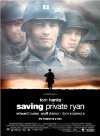
Saving Private Ryan (-9)
1998
It's hard to argue against this portrayal of World War II being one of the more brutal watches among military movies. It is probably the realism and gore that make Saving Private Ryan such a negative on the FMJ Effect scale. I would wager very few people would be interested in suiting up and jumping on a lander to storm Normandy after watching the movie. I would argue that Saving Private Ryan is one of the most thorough war movies out there, covering much of the atmosphere of life in the European theater through the eyes of a small squad. It also includes Vin Diesel in a role where he's somewhat less of a "retarded chimp" than you'll find in his other movies.


Full Metal Jacket (-8)
1987
I struggled with the distinction between this and Saving Private Ryan. In the end I had to place Full Metal Jacket as slightly better on its own scale, if only because most of what was repellant about this film took place in the controlled environment of Parris Island, during basic Marine training for the soldiers that would eventually make their way to Vietnam. However, even though (most) people didn't die during the training segment, Sergeant Hartman (played by R. Lee. Ermey, who, like Samuel L. Jackson, is in everything) does a fantastic job helping the viewer realize that even training is no picnic. Stanley Kubrick goes further, however, and does a great job of showing the disconnect from societal norms that soldiers may face in the field after long deployments.

Black Hawk Down (-5)
2001
Black Hawk Down recounts the "true" events of the Battle of Mogadishu in Somalia that unfold after a Black Hawk helicopter is shot down over the city and survivors of the crash await rescue. I put the word "true" in quotation marks only because there are apparently a bevy of criticisms of the film's veracity and impartiality. At any rate, Black Hawk Down falls on the negative side of the FMJ Effect scale because it shows what can happen when soldiers find themselves exposed on the wrong side of enemy lines. Oh, and speaking of "enemy lines," that's a nice segue into our next film.


Behind Enemy Lines (-2)
2001
Behind Enemy Lines is a fictionalized version of events that occurred during the NATO Bosnian peacekeeping mission. I used this movie because it involves Navy pilots instead of ground troops, and I wanted to have a few varying military perspectives represented. However, Owen Wilson's character quickly becomes a ground troop himself when his plane is shot down and he is forced to spend the next several hours running around Bosnia in an attempt to reach the extraction point. Because of the extreme, perpetual danger his character faces throughout the movie, Behind Enemy Lines has to fall on the negative side of the FMJ Effect scale. However, because it's Owen Wilson in the role, and because his nose is so curious, a lot of the feeling of danger and reality is lost when I watch this movie. That's just the way it is. (For a more thorough portrayal of Navy piloting, go see Top Gun, though I'm sure you already have.)


Neutral (no "Full Metal Jacket Effect") (0)


Body of Lies (3)
2008
This one isn't really a "military movie" per se, because it deals with the CIA. Even if I wanted to stretch the definition of military, I don't think I could bring in clandestine CIA operatives, because they receive an entirely separate budget, etc. etc. So why did I include this movie, and why is it on the positive side of the FMJ Effect scale? Candidly, I included it because it's one of my favorite movies, especially dealing with wartime topics. I just love it. As for why it lands on the positive side of the scale, well, aside from the occasional torture scene, Leonardo DiCaprio makes being a clandestine operative seem pretty awesome. So long as you know what you're doing, I suppose. I also want to direct your attention to a similar movie that I like almost just as much: Traitor. Watch it--especially if you're as big of a Don Cheadle fan as I am.


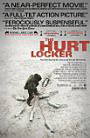
The Hurt Locker (7)
2008
I'll be honest. I would never actually end up in the military, no matter how "cool" a particular movie can make it seem (save for the possibility of doing JAG, but we'll save that for the next movie). However, The Hurt Locker does a great job of making it seem pretty cool. I choose this scene to demonstrate the movie because it illustrates both the terror and mindless boredom that can come with scenarios that arise under deployment--all wrapped in one! Overall, the main reason I loved this movie and rate it highly on the positive side of the FMJ Effect divide is the sheer badassery demonstrated by the main character. Unfortunately, as I would never possess such qualities, I probably shouldn't go wishing for such a role just yet.

A Few Good Men (9)
This one's not entirely in line with the others for two reasons. First, it takes place on a military base and entirely away from combat, and two, the military members I look to in the movie happen to all be JAG lawyers rather than enlisted soldiers. While JAG members have to go through basic training like any other soldier, they will spend their military days trying cases rather than taking bullets. I know it's unfair to compare that to other military films where soldiers are losing limbs, but I credit A Few Good Men with my (slight) interest in joining the JAG Corps. Besides, it introduced one of the most famous lines in movie history.

Inverse "Full Metal Jacket Effect" (10)

Note that I didn't include a film on either the full -10 or 10 side of the scale. That's not to say one doesn't exist, but I would call any movie that receives a straight 10 to be a very effective recruiting video, and any one that receives a -10 to be a strong historical documentary (if it's done properly, it should probably make us want to avoid being in such situations ourselves). There's also no "0" movie, though I'm sure there are many out there that include military scenarios but elicit no response in its viewers either way.

I'm aware there are dozens of other military movies, and many of them are subjectively "better" than the ones I've chosen to include on this list. However, I didn't want to make a post that was itself 10 pages long, nor do I have the will to do so right now. If you're hurt that your favorite movie isn't on here, go ahead and include it in the comments below, and give it a rating on the Full Metal Jacket Effect scale if you'd like.

Monday, March 5, 2012

I'm No Artist #1: Why Giraffes Hate Winter

I'm No Artist #1: Why Giraffes Hate Winter


I know, he has no spots.  Let's say that they're covered in snow.  No head?  Um...tragic...scarf accident?...


Unfamiliar with the series?  Check out the introduction: I'm No Artist

Poor Grammer

Alot of people have alot of different pet peeves.  They can vary from whistling to animals-dressed-as-humans to improperly pronouncing it "supposably".  However, most of these annoyances are encountered in slim numbers and not very often.  One of my more bigger pet peeves is one that I, along with everyone else in the world, encounter on a daily hourly basis.  I am of course speaking about poor grammer.  Whether I hear it in a conversation or read it somewhere online, It brings out my inner grammer nazi.  As soon as I read "...that's there dog...", you can practically see a swastika taking form on my face.  A swastika composed of apostrophes and commas.

Dont get me wrong, I'm by no means a master of the english language, but their are certain basic rules that everyone has been taught at some point in time - whether by a parent or an english teacher or a pretentious classmate - that should stick with you and form the foundation of everything you speak or write for the rest of your life that you just shouldn't forget because its not that hard to remember and I dont know if its lazyness or unintelligence that causes it but it does bother me when people ignore these basic dictional and syntaxical decencies like improper "punctuation" and run-on sentences...

www.toothpastefordinner.com

(I suppose whats even more aggrevating is poor spelling, but fortunately you dont encounter that faux-pas of the english language as often.  Its curtailed by SpellCheck - that infamous red-underline - and the fact that you dont have to spell your words when your speaking outloud.  Unless your talking in front of a b-a-b-y.)

One of the most frequent of these misgrammerizations is the there/they're/their problem.  Obviously, the root of this problem is due to homophones.  (Not that I'm word-bashing or anything.  I just dont think homophones should be getting married.)  They all sounds the same, so (some) people assume there all used the same.  This homophone problem is only exacerbated by the fact that our world is trending less towards writing words and more towards seeing images.  Entertainment and even teaching is continually going in the direction of less books and more films and videos - a medium in which the proper use of "theiy're" is unnecessary.  And even what little composition we still do outside of school or work - ie, the internet, texting, etc - we abbreviate er'thing and take liberties and shortcuts w/ our words, not the least of which is "theiy're."

I'm sure their are other frequent homophone mix-ups two, but I cant think of any write now.

Apostrophes, commas, and other, punctuation mistakes, are quite rampant, as well?  And we can round out my complaints with who/whom and sentences where prepositions are improperly put in.  But I'm not going to belabor the point because the ire of one internet-person will not be enough to out-do the workings of generations of certified and degree-ified professional instructors of the english language.  If you dont get it now, then you probably wont ever.  I'm just imploring you - when speaking or writing, take an extra second and ask yourself if your making the correct grammer choices.  After all, english is your first language (I'm assuming).  Try not to butcher it.


[I apologize for the inflicting the preceding post upon you.  I hope it vexed you as much as it vexed me.  I consider it my comedic version of grammatical-flagellation.  If it makes you feel any better, I'll give you 5 free internet points for each error you spot.  Free internet points!]

Thursday, March 1, 2012

Some Guys Update

Dear reader(s)--since our blog has slowly begun to pick up speed, I wanted to take a moment to "talk" with you again on a few updates.

If you check the authors of individual articles at the bottom of each, you'll notice we have added a third member that wasn't in the original post. We recently welcomed Joules to the Some Guys family, and we expect many worthwhile contributions from him.

Because our blog aspires to provide all types of topics and tones, don't shy away from those that are unfamiliar subjects--we hope to be able to educate and interest as well as entertain.

Additionally, it's uncertain at this stage how frequent postings will occur. As Joker has already made clear, his I'm No Artist series is expected to run weekly (subject to change and motivation levels). Other than that, we can say only that we anticipate updating the blog "several times a week," which really only means we'll each try to provide something at least once a week (again, subject to change and motivation levels--this is far from a career for any of us).

Again, welcome to Some Guys. We hope everyone can find something here they enjoy.